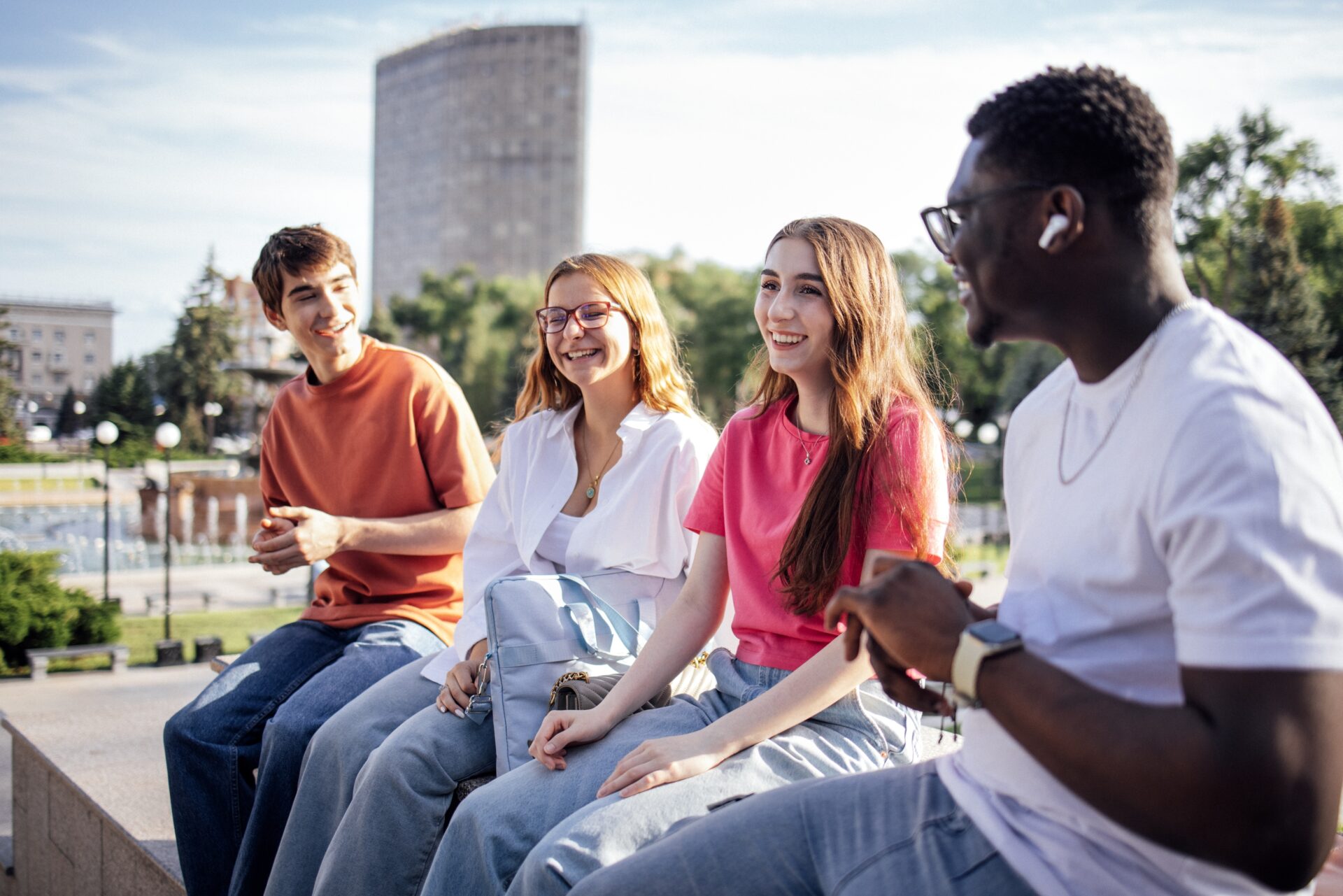
How can we encourage 18–25‑year‑olds to invest in their health when their priorities lie elsewhere? Drawing on behavioural sciences and field‑based initiatives, new approaches are emerging to make prevention more appealing and encourage young people to integrate it into their everyday lives.
Making vaccination desirable
When it comes to health prevention among young adults, the issue is often not a lack of information but a lack of motivation to take action. Vaccination is a good example of this disconnect. Surveys generally show a favourable attitude towards vaccination, yet uptake rates remain uneven. The barriers are often motivational and organisational: complex procedures, a weak sense of urgency, benefits perceived as distant, and an immediate effort seen as disproportionate. A simple solution was tested as part of a project in Georgia, featured in the APRIL Foundation’s third Expert Report: a reminder text message, which increased HPV vaccination uptake by a factor of 1.6. “The project sought to create a context that encouraged action through personalised reminders, simplified procedures and by highlighting how common vaccination already is,” explains Niall Daly, Research Advisor at the Behavioural Insights Team (BIT). “Among the options tested, the most effective text message informed parents or guardians that a vaccine dose had been specifically reserved for their daughter.” This confirms the power of the endowment effect: “This vaccine is yours, don’t let it go to waste” proves more persuasive than factual information alone.
Playing for better outcomes
Another motivational approach, particularly well suited to younger audiences, is gamification and its ability to foster a sense of empowerment. The video game Re-Mission was developed to improve adherence to cancer treatment. Players control a nanorobot fighting cancer cells within an immersive 3D environment. Every victory in the virtual world strengthens players’ sense of self‑efficacy in real life. The result? Improved treatment adherence. However, Marie-Laure Welter, neurologist at the Institut du Cerveau (Brain Institute) and expert in serious games, highlights the complexity of the challenge: “Encouraging people to engage in self‑care practices is extremely difficult if they do not have a healthcare professional alongside them. Cognitive science consistently points to the importance of training and repeated practice, which means that game‑based interventions must remain engaging over time without becoming boring or overly demanding.” Motivation through gaming only works if it provides immediate feedback and a tangible sense of competence.
The motivation paradox
More broadly, the projects presented in the APRIL Foundation’s third Expert Report, whether focused on reducing risky behaviours, protecting mental health or preventing disengagement from care pathways, point to a common finding: individual motivation increases when it is embedded within a collective dynamic. “We are more motivated to do something when we feel that people like us are doing it as well,” explains Laura Litvine, Director of Behavioural Insights Team France. This mechanism is based on descriptive norms: what individuals believe most other people do strongly influences what they themselves feel comfortable doing. “Making genuinely common behaviours visible (moderation, caution, seeking help or solutions) can be transformative. Prevention is no longer perceived as an individual effort that goes against the tide, but rather as alignment with behaviours already adopted by others, which naturally feels easier,” she adds.
The environmental nudge
As important as personal motivation may be, it is not always sufficient, particularly when promoting behaviours that may not initially seem appealing. After all, who genuinely wants to take the stairs instead of the lift, or choose water over a sugary soft drink? When willpower falters, the environment can help. This is the realm of the nudge, illustrated by several projects featured in the Expert Report:
➜ A Danish initiative demonstrated that simply changing the arrangement of drinks in vending machines (placing water at eye level and soft drinks lower down) increased healthier choices by 11%.
➜ In Germany, a secondary school tested a flexible start‑time system allowing students to choose whether classes began at 8:00 a.m. or 8:50 a.m. “Giving students a choice over when their school day begins also strengthens their sense of control,” noted the researchers. The results included improved sleep quality, fewer forced awakenings, greater motivation and enhanced concentration.
“Behavioural science experiments highlight the limitations of health prevention strategies that expect individuals to display heroic levels of motivation. At the same time, they point towards a more promising path, one that requires health stakeholders to design projects and environments where action becomes easy, legitimate and socially supported,” concludes Sophie Ferreira Le Morvan, Executive Director of the APRIL Foundation.